
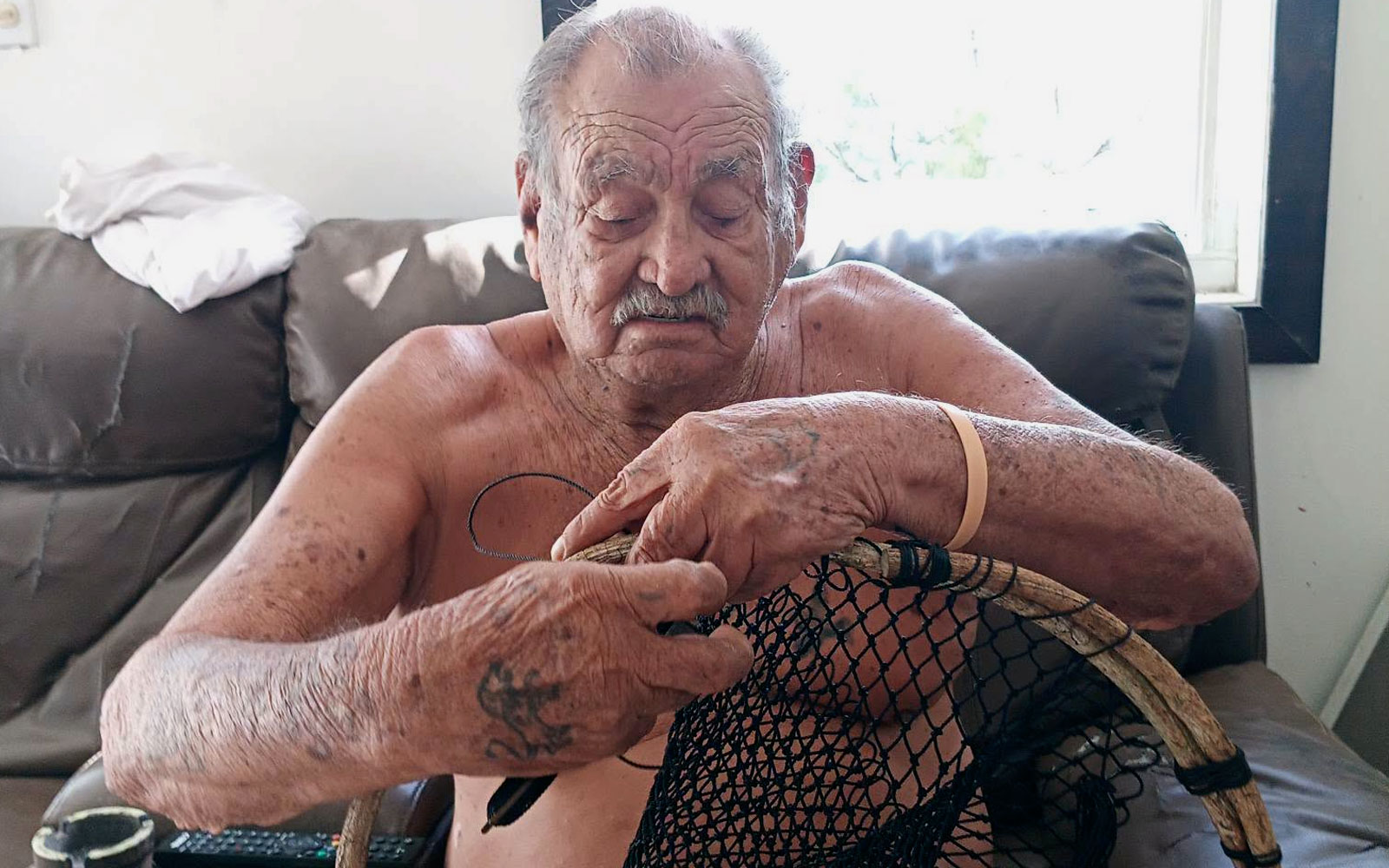
Sometimes a simple photograph can bring back memories you haven’t thought about in years. I recently came across a post from the Lara family showing Don Tuly Lara sitting down and patiently weaving a fishing net by hand. I immediately thought about my uncle, Wilber Marin, and the many times I sat and watched him knit and repair the cast nets he used during his fishing days.
As a child, I was fascinated by it. My uncle made it look so easy, his hands moving almost automatically as he tied knot after knot and slowly created this perfectly measured mesh. He was constantly patching an old net or making a new one, and I remember being amazed that something so intricate could be created with nothing more than string, a couple of simple handmade tools, patience, and an incredible amount of skill.
My father, Angel Nuñez, also knew how to make fishing nets. He learned from his father, as most young men growing up in the fishing village of San Pedro were expected to do. But Dad eventually became a teacher and dedicated his life to education, so I never really saw him making nets while I was growing up.


Years later, however, he wrote about the tradition in one of his 25 Years Ago columns, and his words perfectly captured just how important this skill once was to San Pedro families. “Today I want to touch on the art of making fishing nets, which is an art every fisherman in the past had to learn and teach it to their children too and pass it to a new generation.”
Dad remembered learning from his own father how to “knit” a net, creating one mesh after another until an entire fishing net gradually took shape. What I especially love about his recollection is that net making wasn’t always the work of one person. It could become a family activity.
When his father became tired or bored, he would put the net aside and someone else in the family might continue where he left off. Sons, daughters and even Mom could participate. There was also something very practical behind all that family bonding. These nets represented food on the table and income for the household. As Dad recalled, part of the excitement came from imagining the delicious fish that would eventually be caught in those interlocking strands.
Fishing Nets Helped Build San Pedro
A Skill That Helped Build San Pedro – It’s easy to forget today just how important fishing was to the economy and everyday life of old San Pedro. Before tourism became our dominant industry, the sea provided livelihoods for countless island families. Fishermen didn’t simply jump into a boat with equipment purchased online or shipped in from somewhere else. Much of what they needed required knowledge that had been handed down through generations.
Making and repairing your own fishing nets was part of being a fisherman.
You had to understand the size of the mesh, how the knots were tied, how the net should open, how much weight was required along the lead line, and how everything worked together once it hit the water. A poorly constructed net wasn’t simply an inconvenience. It could mean coming home without the catch your family depended upon.
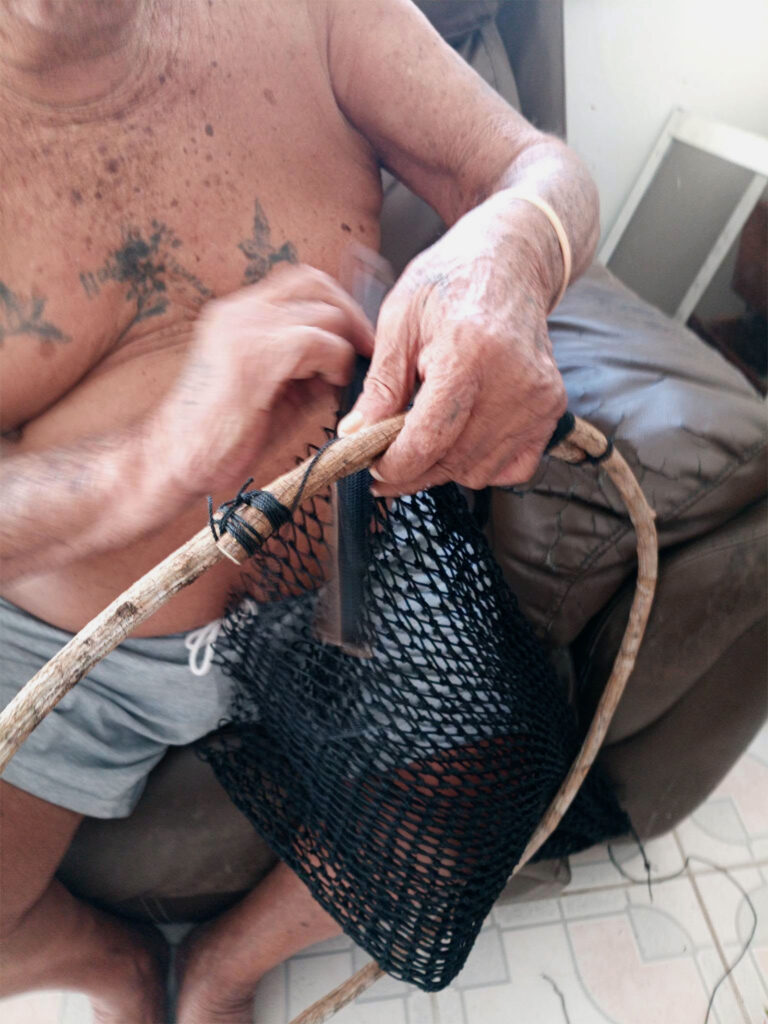
That makes seeing 84-year-old Don Tuly Lara continuing this tradition today even more special. The Lara family describes him as perhaps one of the last remaining artisans on Ambergris Caye still practicing the traditional craft. At an age when most people would happily put the tools away, Don Tuly’s hands still remember exactly what to do.
Mesh by mesh, knot by knot.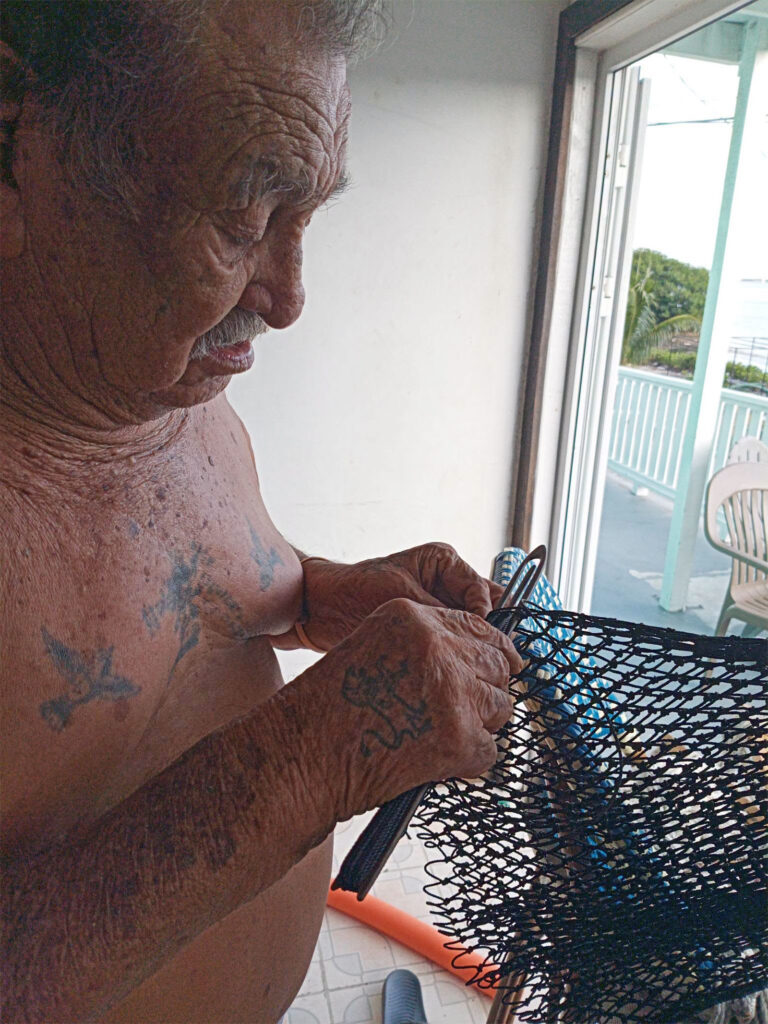
In the photographs shared by his family, he is weaving a traditional “Hamo,” which will eventually be displayed at the Eco-Museum. I love that; future generations will be able to see the finished net, but I hope they also understand the tremendous amount of knowledge represented by it. It isn’t simply an old fishing net hanging in a museum; it’s a piece of San Pedro.
From Fishing Village to Tourism Mecca
San Pedro has transformed so dramatically that sometimes we forget how quickly it happened. The fishing boats gave way to dive boats and tour boats. Sandy streets became concrete and cobblestone roads. Fishing camps became resorts. Tourism created opportunities our grandparents probably could never have imagined, but along the way some of the skills that defined everyday island life slowly disappeared – net making is one of them.
Commercially manufactured fishing gear made things easier, while fewer young San Pedranos entered traditional fishing. Eventually, there was little reason for a child to sit beside his father or grandfather and learn how to tie hundreds upon hundreds of meshes together, and that’s how traditions disappear.
Not necessarily because somebody decides they aren’t important anymore, but because one generation simply doesn’t have the need or opportunity to teach the next. That’s why these photographs of Don Tuli struck me. They brought me right back to sitting beside my uncle Wilber, watching his hands work and wondering how he knew exactly where every knot belonged. At the time, I didn’t realize I was watching part of our cultural heritage right in front of me.
Don Tuli Lara, my uncle Wilber, my father, my grandfather, and generations of San Pedro fishermen before them carried knowledge that helped sustain this island long before tourism arrived. We should document these traditions while the people who practiced them are still here to tell us how it was done. Take the photographs. Record the videos. Sit down with our elders. Ask them questions. Let children watch them work. Because preserving our history isn’t only about saving old buildings and photographs. Sometimes our history lives in someone’s hands, and in this case, it lives in the patient hands of an 84-year-old fisherman, still tying one knot to another and keeping a beautiful piece of old San Pedro alive.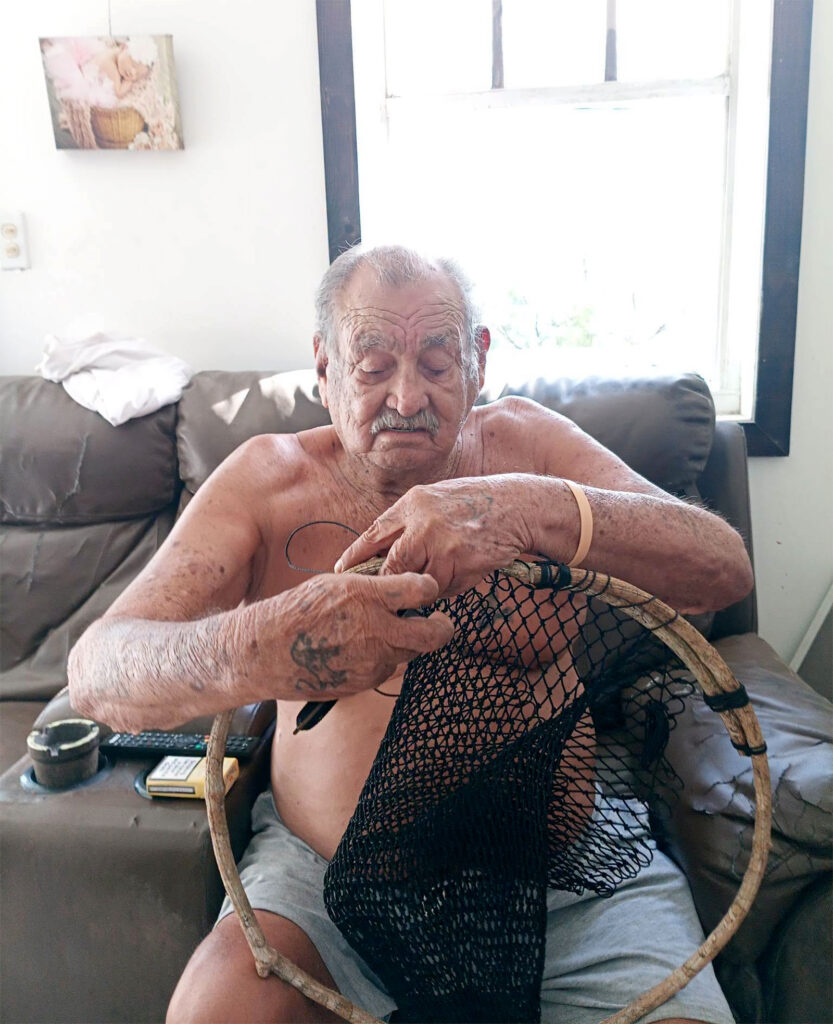
Click Here for More on Ambergris Today / Follow us on Instagram